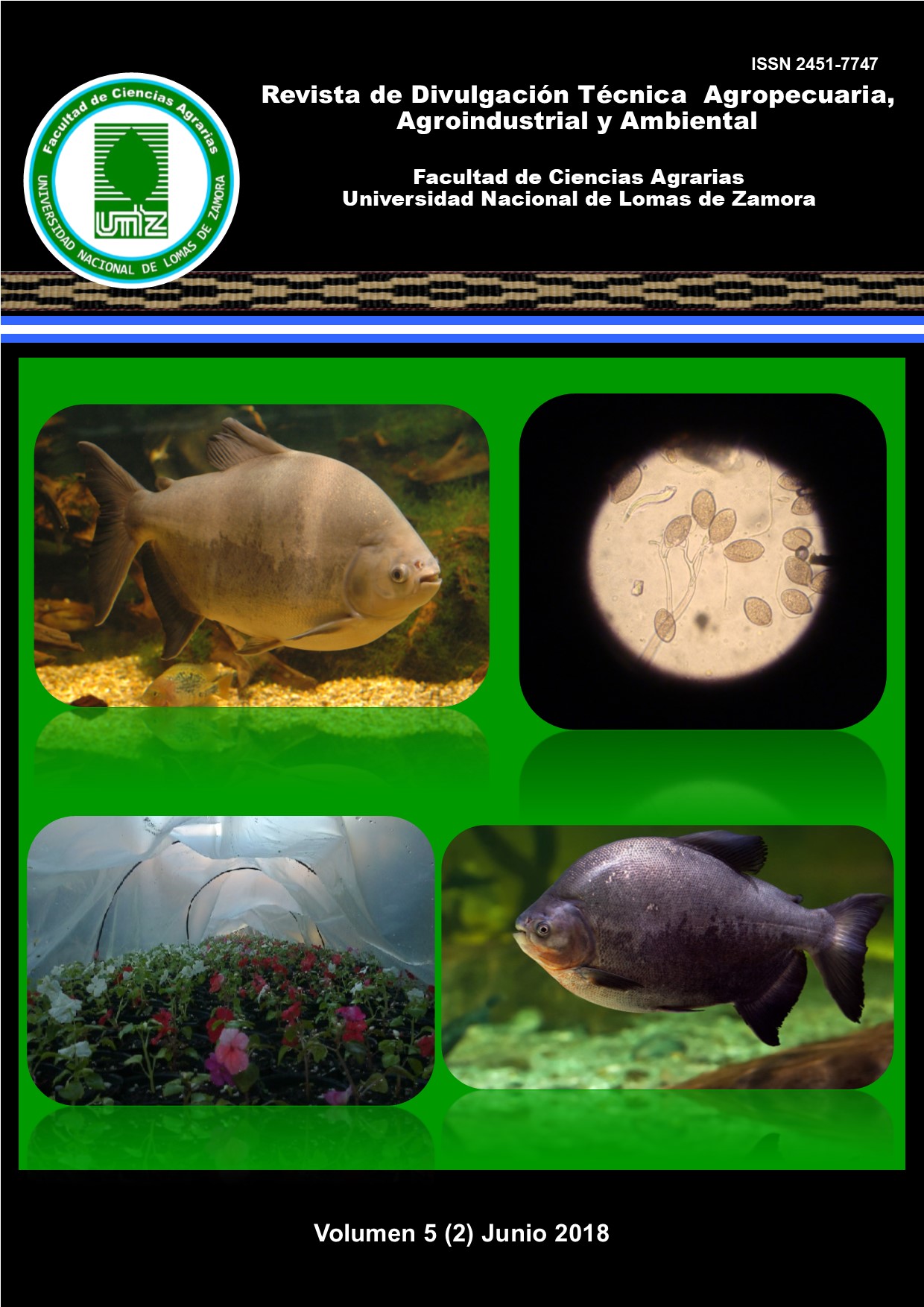
SWOT Analysis of Pacu Production (Piaractus mesopotamicus Holmberg) in Argentina: Future Perspectives
Keywords:
aquaculture, pacu, production, perspectivesAbstract
The Pacu (Piaractus mesopotamicus Holmberg) is a teleost fish native to the Amazon, Uruguay, and Paraná river basins. It is a migratory species with an omnivorous diet and herbivorous tendencies. However, it is also considered an opportunistic feeder, as it consumes small animals, insects, and crustaceans, among others, in addition to plant matter and planktonic organisms. It enjoys broad consumer acceptance. Originally, specimens weighing 1.5 kg were obtained through river fishing in its native habitats. Currently, it is no longer found in these rivers with the same frequency as in the past, and it has even been declared extinct in the Paraná River. This has led several provinces to ban its fishing, necessitating captive production through aquaculture to meet market demands. In recent years, this species has become the most significant in Argentine aquaculture production, displacing rainbow trout—historically the most important species—to second place. Given this phenomenon, the present study was developed with the objective of conducting an analysis of the Strengths, Opportunities, Weaknesses, and Threats (SWOT) of Pacu production in the country.