Descriptive analysis and estimation of genetic parameters for litter size in a maternal rabbit line
Keywords:
rabbits, litter size, response to selectionAbstract
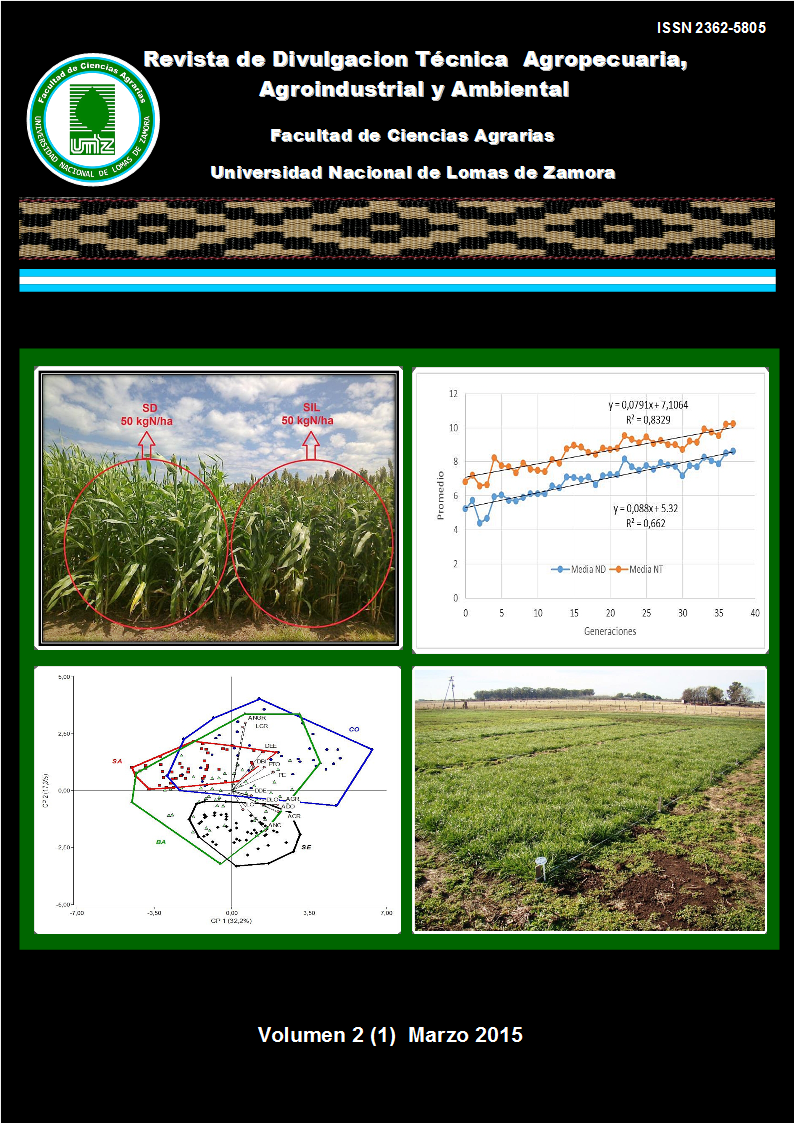
The most commonly used criteria for the improvement of maternal rabbit lines are those related to litter size, particularly the number of kits born (TB) and the number of kits weaned (NW). Although these traits have low heritability, long-term selection programs demonstrate that improvement is possible. In the present study, it was observed that after 37 generations of selection for NW, phenotypic trends were $0.079$ TB and $0.088$ NW per generation. Estimates of heritability for TB and NW were $0.128$ and $0.095$, respectively, while repeatability values of $0.225$ and $0.166$ were obtained. The genetic trend was estimated at $0.13$ and $0.15$ kits per generation for TB and NW. Other authors, using a control population, estimated a direct response for NW in this line of $0.085$ kits per generation; this suggests an overestimation in the trend found in this study when using a repeatability additive mixed model. The potential reasons for this discrepancy are the subject of future research.