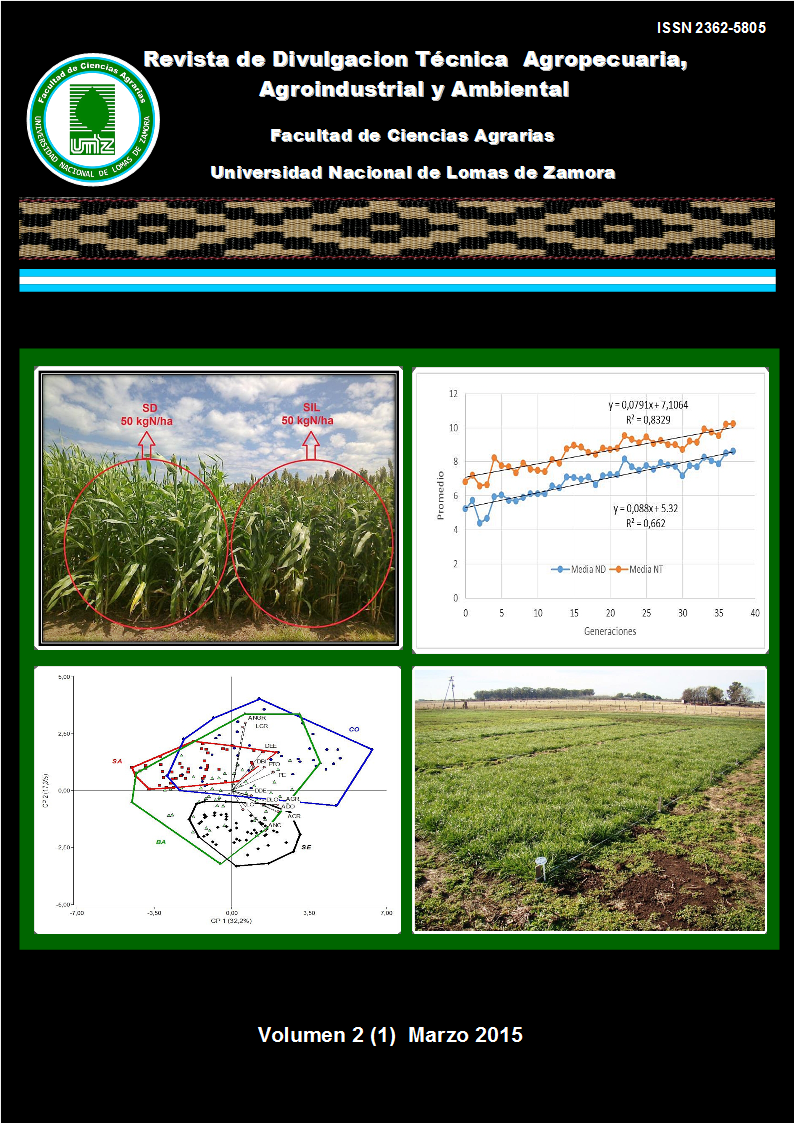
Sweet sorghum for bioenergy: Fine-tuning crop management
Abstract
Bioethanol is an alcohol produced through the fermentation of reducing sugars from various plants, with sugarcane being the most widely used sugar crop for this type of production. Currently, the primary use of bioethanol is as a substitute for gasoline, either blended in different proportions or as an additive through its conversion into Ethyl Tert-Butyl Ether (ETBE). There is an intention to promote a project that proposes doubling the bioethanol blend in gasoline by 2014, reaching a 10% blend with organic fuels. This implies that it will be necessary to significantly increase bioethanol production to meet its requirements as a fuel.
Bioethanol is produced via three possible pathways:
-
a) Directly from sugar-based biomass.
-
b) Through conventional hydrolysis (moderate and enzymatic) of starch-based biomass.
-
c) Through thermal pretreatment followed by strong hydrolysis (acidic or enzymatic) of lignocellulosic biomass.
The first pathway involves sugar-rich agricultural products such as sugar beet, sugarcane, and, more recently, sweet sorghum. Alcoholic fermentation is a bio-reaction occurring in the complete absence of air, which converts sugars into alcohol and carbon dioxide . The primary agents responsible for this transformation are yeasts, and among these, strains of Saccharomyces cerevisiae are generally used.