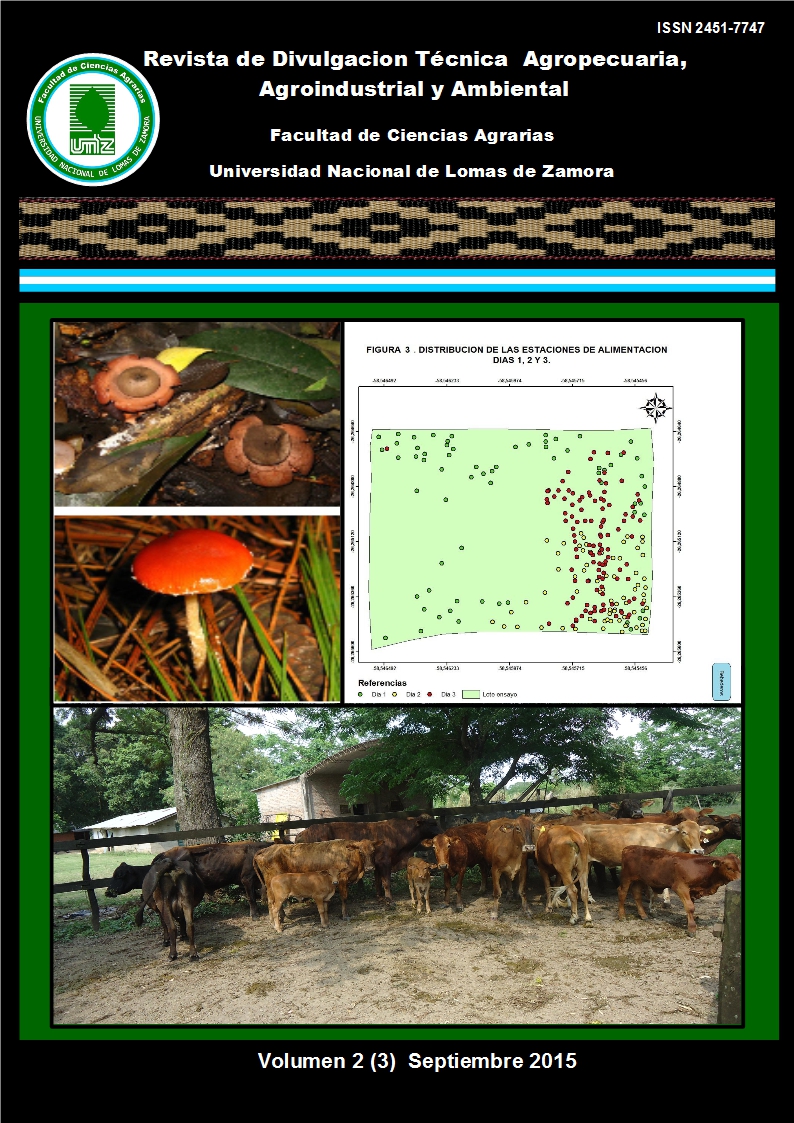
Spatial distribution of cattle grazing in a rotational system
Keywords:
spatial distribution, spatial memory, feeding stations, feeding routes, grazing behaviorAbstract
To determine the spatial distribution of grazing within a single paddock under a rotational grazing system, compare feeding routes at different time intervals, and identify variations, four phenotypically similar cows were randomly selected from a herd of 25. The animals were individually marked with paint and observed over three days, with a 12-day interval between each session. Each observation period lasted 8 hours, alternating 30 minutes of recording with 15-minute breaks. Each feeding station (number and location) and their sequences were recorded on a previously georeferenced paddock sketch. Differences in the number of feeding stations between cycles and animals were analyzed using Tukey’s Test, while variations in grazing routes between cycles were assessed through Moran’s I spatial autocorrelation and standard distance geostatistical procedures, with an error level of 0.05. The study concluded that animals alter their feeding routes in subsequent grazing cycles. Additionally, the number of feeding stations increases progressively in later cycles as their spatial distribution shifts from completely random to clustered.