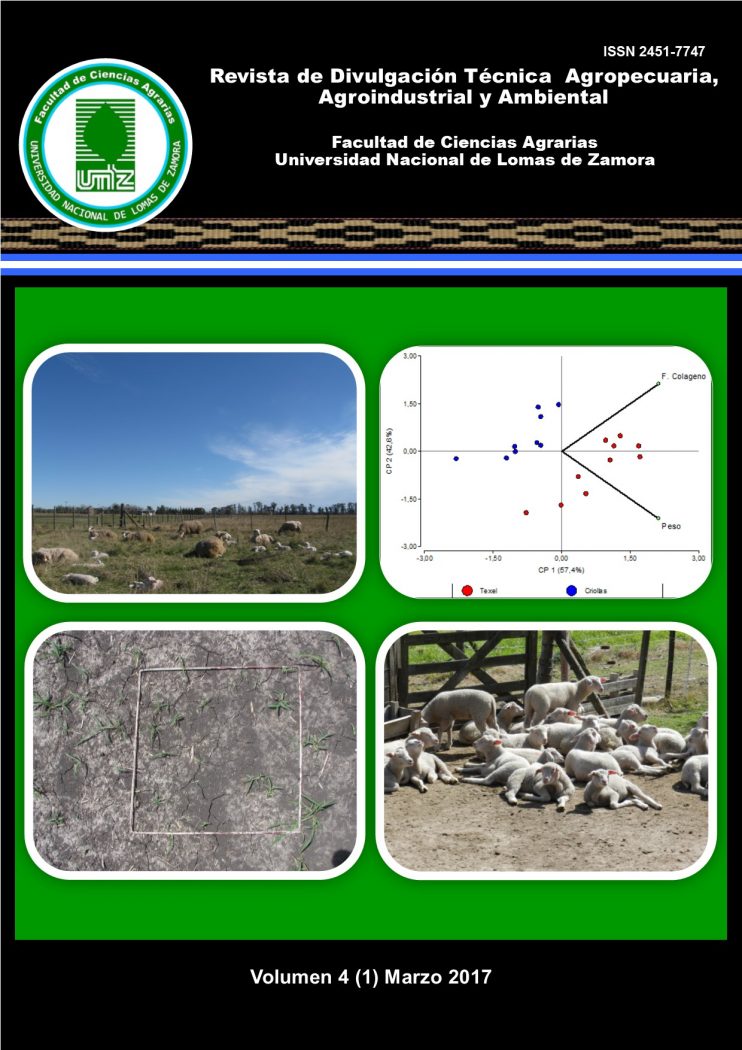
Evaluation of Type I Collagen in Two Sheep Breeds Using In Vivo Medial Gluteal Muscle Samples
Keywords:
type I collagen, muscle, tenderness, sheepAbstract
Tenderness is the most important and variable factor in meat quality. Traditionally, research evaluating beef tenderness employs either the Warner-Bratzler shear force (WBSF) device, which measures the cutting resistance of the muscle, or sensory panels. However, these analyses are time-consuming, expensive, and performed post-mortem. Like other parameters defining meat quality, texture and tenderness depend on numerous factors related to production, as well as pre- and post-slaughter management. The objective of this study was to evaluate the amount of intramuscular type I collagen in Gluteus medius (a locomotor muscle) samples obtained in vivo from two sheep breeds, Texel and Criolla. A random sample of ten 2-year-old animals from each breed was used, employing a modified Picrosirius-red histological technique to quantify intramuscular type I collagen. In the Gluteus medius muscle of 2-year-old ewes, no differences were found between Texel and Criolla breeds regarding collagen fibers (type I collagen); furthermore, no correlation was detected between body weight and fiber content, despite the Texel sheep being heavier.